
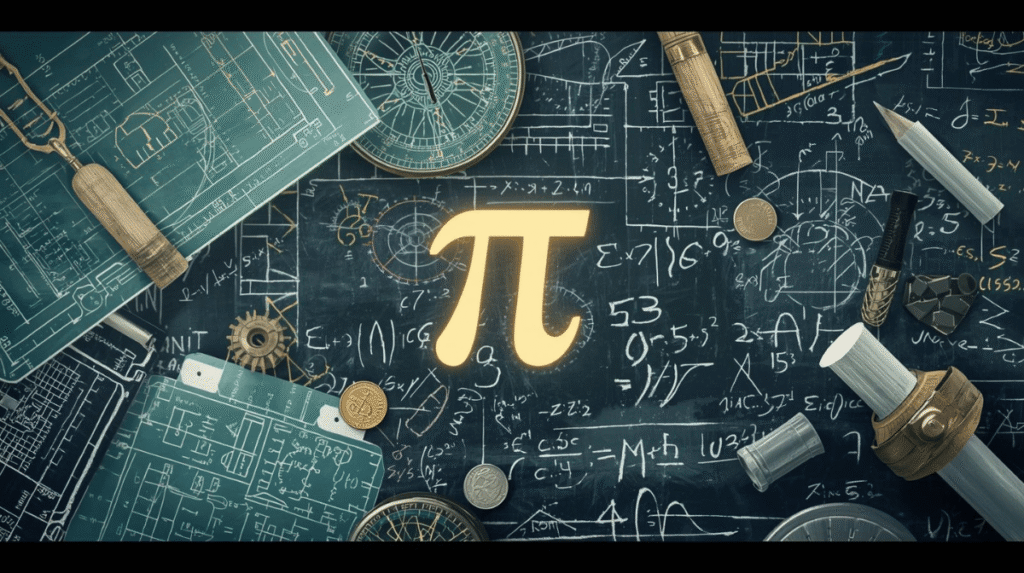
1. Introduction: More Than Just a Math Formula
As someone who has helped students, educators, and construction professionals understand practical math applications, I’ve seen one truth repeatedly: circle math is everywhere—and most people don’t realize how often they rely on it.
The relationship between circumference and diameter is not just something taught in classrooms. It’s used in:
- Engineering blueprints
- Road and bridge design
- Manufacturing tolerances
- Medical imaging equipment
- Everyday measurements like wheels and pipes
This universal relationship forms the foundation of circle math applications, making it one of the most important concepts in geometry.
2. Circumference vs Diameter: The Core Difference
(Primary keyword: circumference vs diameter)
Let’s clarify the two terms:
- Diameter: A straight line passing through the center of a circle from one side to the other
- Circumference: The distance around the edge of the circle
📌 Key rule:
The circumference is always π (pi) times the diameter
This ratio never changes—no matter the size of the circle.
Related Calculator
Circumference to Diameter Calculator – Formula, Examples & Visual Guide
Circumference to Diameter Calculator Convert between circumference and diameter of a circle using the mathematical constant π (pi). Calculate: Circumference…
Use This Calculator📁 More Math Calculators
🔍 Explore All Math Calculators3. The Pi Relationship Explained Simply
(Primary keyword: pi relationship explained)
Pi (π) is a mathematical constant approximately equal to 3.1416.
Mathematically:
- Circumference = π × Diameter
- Diameter = Circumference ÷ π
This relationship has been verified for over 2,000 years, dating back to Archimedes, and remains essential in modern science.
According to Encyclopaedia Britannica, pi is one of the most important constants in mathematics due to its role in geometry, physics, and engineering.
4. Why This Relationship Matters in Mathematics
(Keyword: circle math applications)
In mathematics education, circumference and diameter serve as a gateway concept for:
- Understanding constants
- Learning ratios and proportions
- Developing spatial reasoning
- Preparing for calculus and trigonometry
Teachers often use circles to introduce real-world math because the relationship is:
- Predictable
- Visual
- Easy to verify experimentally
This makes it ideal for developing mathematical intuition.
5. Engineering & Construction Applications
In engineering and construction, this relationship becomes critical.
🏗 Examples include:
- Pipe sizing: Engineers measure circumference when diameter isn’t accessible
- Structural columns: Accurate diameter calculations ensure load-bearing safety
- Mechanical design: Gears and rotating parts depend on exact circular measurements
The American Society of Civil Engineers (ASCE) emphasizes that small circular measurement errors can cause material waste, vibration issues, or system failure.
In short:
Incorrect diameter = incorrect design
6. Everyday Life Examples You Don’t Notice
Even outside professional settings, the circumference-to-diameter relationship affects daily life.
🚗 Transportation
- Tire sizing and rotation calculations
🏠 Home Improvement
- Measuring circular vents, tanks, or ducts
🏀 Sports
- Ball manufacturing and pressure calculations
🧑🍳 Cooking
- Pizza sizes and pan measurements
Most people unknowingly rely on this relationship every day.
7. What Happens When Measurements Are Wrong
Misunderstanding circumference vs diameter can lead to:
- Incorrect material orders
- Poor-fitting components
- Costly project delays
- Safety risks
A report referenced by NIST (National Institute of Standards and Technology) highlights that measurement errors account for billions in annual construction inefficiencies.
Knowing the correct relationship prevents these mistakes.
8. Why Students and Professionals Must Master It
For Students:
- Builds strong geometry foundations
- Improves standardized test performance
- Encourages logical thinking
For Professionals:
- Ensures accuracy in design and fabrication
- Reduces costly errors
- Improves communication across teams
This is why educators and industry professionals agree that circle measurement fundamentals should never be skipped.
9. Conclusion: A Universal Rule Worth Knowing
The relationship between circumference and diameter is one of the most reliable rules in mathematics.
Circumference ÷ Diameter = π
Whether you’re solving math problems, designing structures, or measuring everyday objects, this principle delivers clarity and precision.
Mastering it builds confidence, accuracy, and trust in your work—no matter your field.
📌 Next step: Practice measuring real objects and verifying the relationship yourself. Experience turns formulas into understanding.
10. FAQs
1. Why is pi always the same?
Because it represents a constant ratio found in all circles, regardless of size.
2. Is circumference more useful than diameter?
Both are essential; circumference is often easier to measure in real-world situations.
3. Where is this relationship used professionally?
Engineering, architecture, manufacturing, physics, and medical imaging.
4. Can I calculate diameter without knowing pi?
No—pi is required for accurate circle calculations.
5. Is this relationship taught globally?
Yes. It’s part of standard math curricula worldwide.
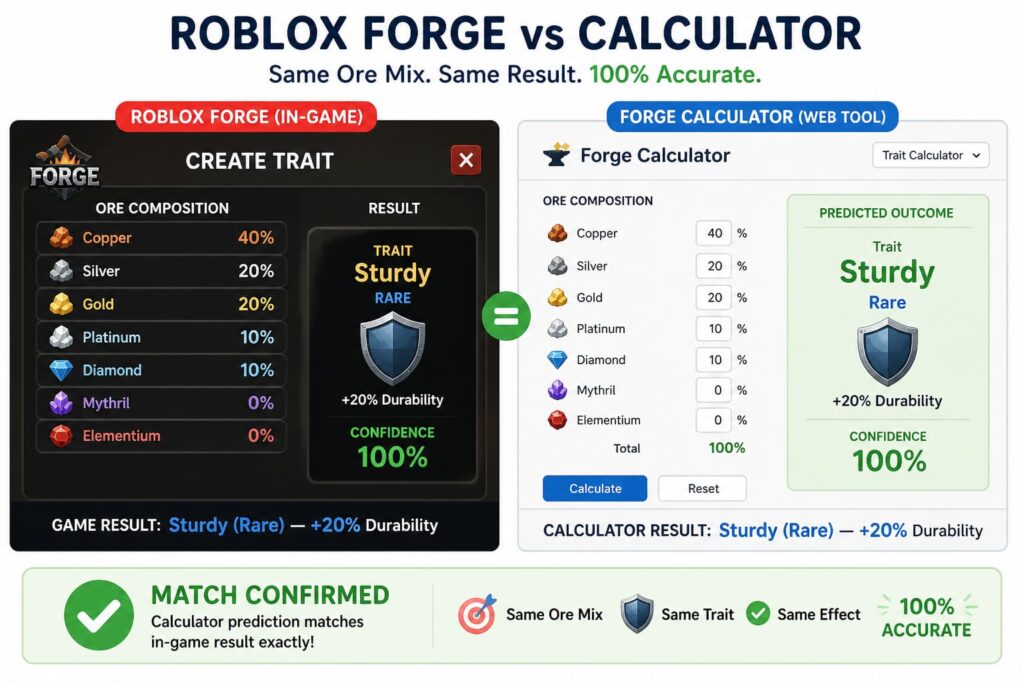
The Forge Calculator Roblox Guide: Best Strategy for Maximum Results
What Is The Forge in Roblox? The Forge is a crafting-focused Roblox game. Players mine…
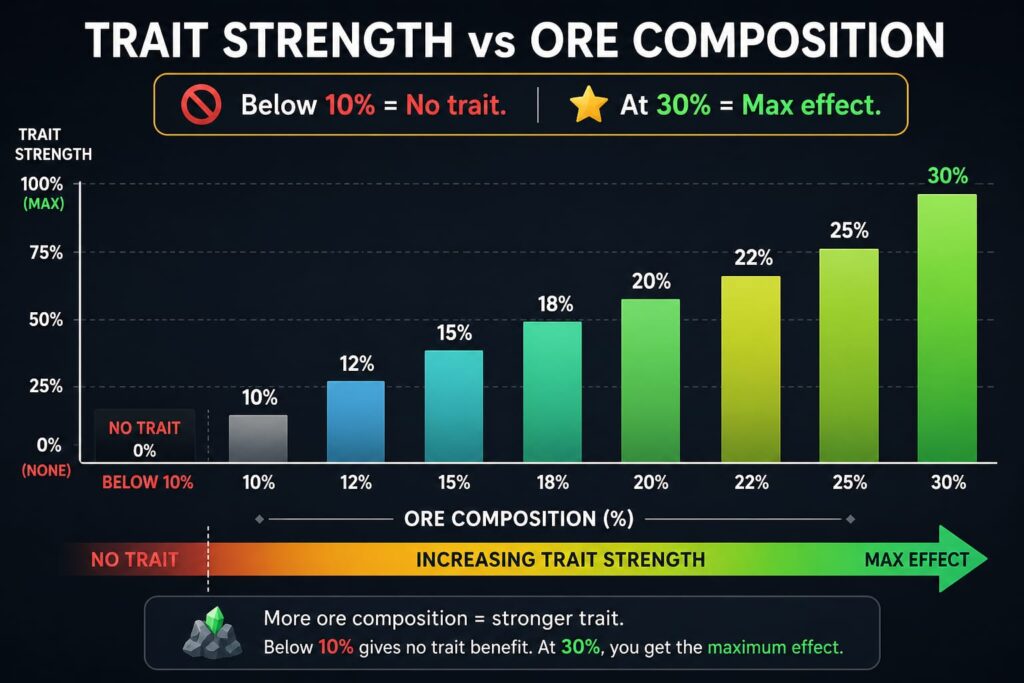
How The Forge Calculator Works (Complete Guide)
What Is The Forge Calculator? The Forge Calculator is a fan-made online tool. It simulates…

Nanometers Explained: Measuring Molecules and Materials at the Nanoscale
The Direct Answer: What Is Nanometer ? A nanometer (symbol: nm) is a unit of…
Best Army Combinations in Settlers Combat Simulator (Winning Formulas)
1. Why Army Composition Matters More Than Army Size In The Settlers Online, a beginner looks…

What Is a Dalton? Understanding Atomic Mass in Chemistry
The Direct Answer: What Is a Dalton? A dalton (symbol: Da) is a unit of…

How Combat Simulators Help You Win Strategy Games (With Settlers Example)
1. The Hidden Cost of Guessing in Strategy Games You have been there. You spend…