
What Plastic Numbers Mean
You may have seen a small triangle with a number inside it on the bottom of a plastic bottle. It’s not just a decoration; it’s part of a system called recycling codes 1–7, and you need to know what it means today.
The numbers on plastic mean more than just recycling. These codes tell you what kind of plastic it is, how safe it is, and if it can be reused or recycled. Knowing these numbers can help you make better choices in a world where plastic pollution is becoming more of a problem.
So, what do these numbers really mean? Let’s go through it step by step.
What do recycling codes 1–7 mean?
Resin Identification Codes (RIC) are another name for the recycling codes 1–7. They were made in 1988 to make sorting plastic easier.
🧾 A Brief History of Plastic Resin Identification Codes
These codes were first used by the plastics industry to help recycling centers, not consumers. But over time, they became useful for regular people.
Each number stands for a certain kind of plastic polymer, like HDPE or PET. The strength, flexibility, and chemical makeup of these materials are all different.
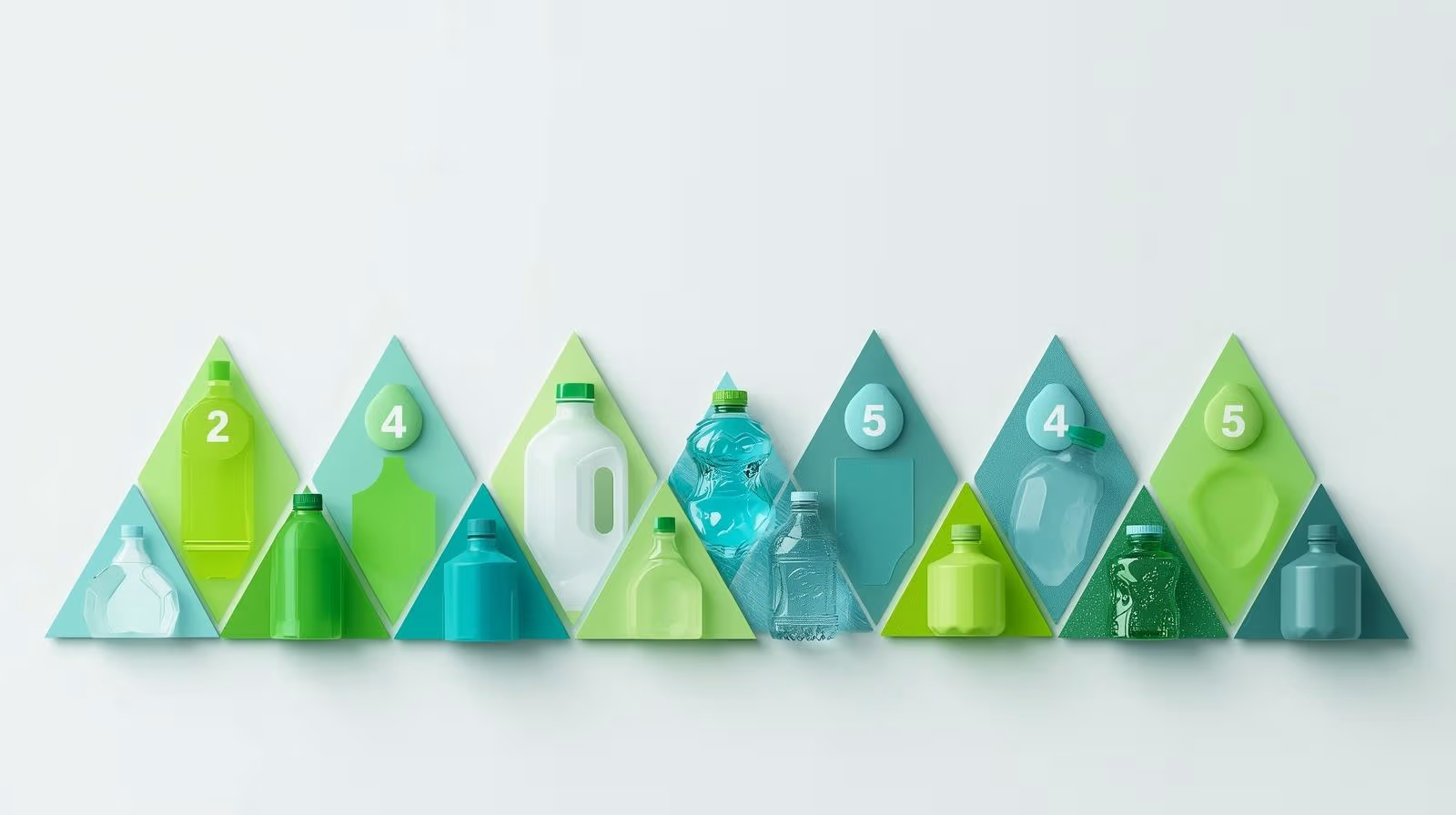
🌱 Why Plastic Numbers Are Important
There are two main reasons why it’s important to know what plastic numbers mean:
🌍 Effects on the environment
Some plastics can’t be recycled.
Some take hundreds of years to break down.
Pollution happens when things are thrown away wrong ⚠️ Health and Safety Issues
When heated or reused, some plastics can let out chemicals that are bad for you. For instance:
BPA (Bisphenol A) and Phthalates
Knowing the code helps you stay away from dangerous plastics.
Plastic Code #1 (PET or PETE)
Polyethylene Terephthalate (PET) is a type of plastic that is very common.
🔍 Uses, Safety, and Recycling
Used in bottles of water and soda
Light and see-through
Recommended for one-time use
Yes, it can be recycled.
⚠️ Risk: If reused, it could leak chemicals
2nd Plastic Code (HDPE)
High-Density Polyethylene is tougher and lasts longer.
🔍 Uses, Safety, and How to Recycle
Bottles of detergent and milk
Not affected by chemicals
Safe to use again and again
✅ Recyclable: A lot
Yes, it’s safe.
🚫 Plastic Code #3 (PVC)
Polyvinyl Chloride is not as nice.
🔍 Uses, Safety, and Dangers
Toys, pipes, and packaging
Has harmful additives
❌ Recyclable: Not often ⚠️ Risk: High (toxic chemicals)
🛍️ LDPE (Plastic Code #4)
Polyethylene with a low density is flexible.
🔍 How to Use and Recycle
Plastic bags and wraps
Light and soft
⚠️ Recyclable: Not much; ✅ Safe: Most of the time
Plastic Code #5 (PP)
Polypropylene can handle heat.
🔍 Why It’s Safe
Yogurt cups, food containers
Safe for the microwave
✅ Recyclable: More and more
Yes, it is safe.
☕ Code #6 for plastic (PS)
There is a lot of debate about polystyrene (styrofoam).
🔍 Risks and Problems with the Environment
Cups that can be thrown away, foam containers
Breaks down into tiny pieces of plastic
❌ Recyclable: Rare ⚠️ Risk: High
Plastic Code #7 (Other)
This group includes everything else.
🔍 What Are Mixed Plastics?
Bioplastics and polycarbonate
Contains BPA a lot
⚠️ Risk: Varies ⚠️ Recyclable: Hard
🔍 Plastic Quality Checker: How to Tell Which Plastics Are Safe
Need a quick way to check the quality of plastic? This is a simple guide:
Code Safety Level Suggestion
- Medium. Use once.
2 High Safe reuse
3 Low: Don’t use it again. 4 Medium: Limited reuse.
5 High: The best choice
6 Low Stay Away
7 Changeable Double-check carefully 🔁 Which plastic codes are safe to use again?
Not all plastics are the same.
✅ Safe Choices:
2 (HDPE) #5 (PP) ⚠️ Use with Caution: #1 (PET) ❌ Avoid: #3 (PVC) #6 (PS) #7 (Some types)
♻️ How to Recycle Plastics the Right Way
Recycling isn’t just throwing things away.
🧠 Smart Tips:
Wash containers
Take off the labels if you need to.
Sort by type
Also, look up the rules for recycling in your area, since not all places take all types of plastic.
🤔 Things People Get Wrong About Plastic Numbers
Let’s get things straight:
❌ “All plastics can be recycled” → Not true ❌ “Higher number = worse plastic” → Not always ❌ “Recycling symbol means eco-friendly” → Misleading
If you know what plastic numbers mean, you can avoid these myths.
🚀 The Future of Recycling Plastic
It looks like the future will be bright:
Plastics that break down in the environment
Recycling chemicals
Campaigns to raise awareness around the world
Companies and governments are doing more, but people still need to know about it.
❓ Questions and Answers About the Meaning of Plastic Numbers
- What does the number in the recycling triangle mean?
It tells you what kind of plastic resin it is.
- Can you recycle all types of plastic?
No, only some kinds are widely accepted.
- What kind of plastic is safest for storing food?
The safest codes are #2 and #5.
- Is plastic #7 always bad?
Not always, but you should be careful because of the mixed materials.
- Is it okay to use plastic water bottles again?
It is not a good idea to use it for a long time.
- What makes some plastics not able to be recycled?
Because of the cost, contamination, or lack of facilities.
🏁 Conclusion
It’s not just helpful to know what plastic numbers mean and what recycling codes 1–7 are; it’s necessary in today’s world. These little numbers tell you a lot about safety, how they affect the environment, and how easy they are to use.
You become a smarter shopper when you learn how to read them. You help the planet stay clean, protect your health, and cut down on waste.
The next time you pick up a plastic item, turn it over and let that number help you decide.